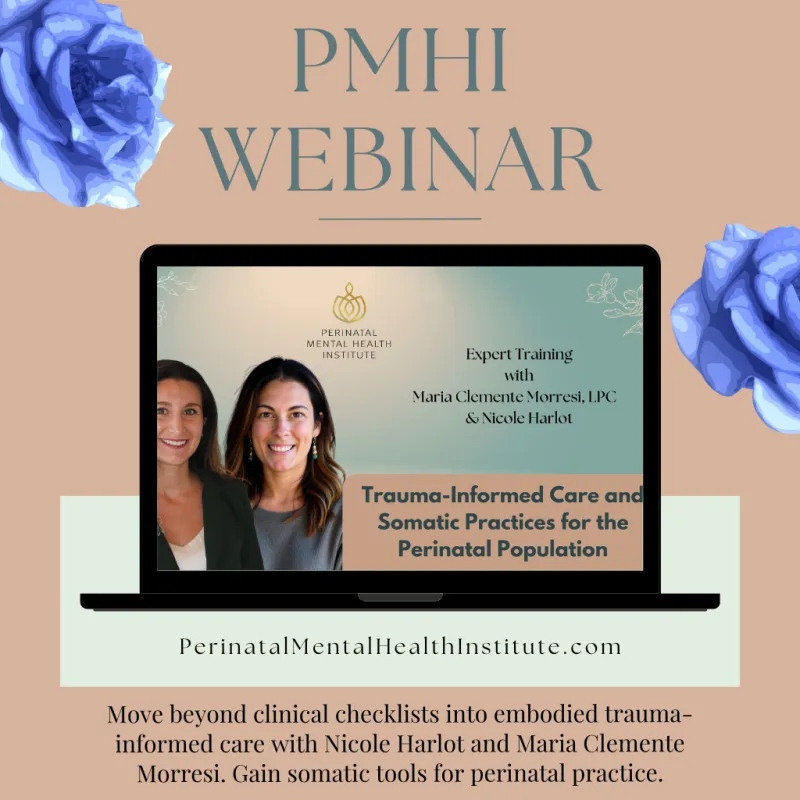

Trauma-Informed Care and Somatic Practices for the Perinatal Population
€15.00
Quantity
The perinatal period is one of the most physiologically and emotionally demanding transitions in a person's life — and for those with a history of trauma, it can be profoundly destabilizing. This training moves Trauma-Informed Care (TIC) beyond a checklist of clinical competencies and into a deeper, more embodied framework: one that centers safety, trustworthiness, and patient agency at every point of care.
Participants will explore the neurobiological underpinnings of trauma, including how the HPA Axis mediates the body's stress response and why trauma doesn't simply fade with time — it recalibrates the brain.
A central focus of this training is the shift from implied to explicit informed consent — restoring what trauma so often steals: the gift of choice. Professionals will learn how small but intentional shifts in language, pacing, and power-sharing can fundamentally transform the therapeutic relationship.
Because the body keeps the score, healing must meet trauma where it lives. This training introduces neurosomatic and somatic practices designed to work at the level of the cells and nervous system, offering perinatal professionals concrete tools to support regulation, safety, and resilience in their clients. Ultimately, true trauma-informed excellence is achieved when the clinician's knowledge meets the client's lived expertise — and both are honoured equally.
Learning objectives:
- What You Will Learn
✨The core principles of Trauma-Informed Care and how to move beyond surface-level implementation in perinatal settings
✨ How the HPA Axis regulates the stress response and why chronic or traumatic stress creates lasting physiological change
✨ The ways trauma recalibrates the brain, including its effects on threat perception, sensory filtering, and interoception (the ability to sense one's own body)
✨ Why the perinatal period is a particularly vulnerable window for trauma activation and re-traumatization
✨ The critical distinction between implied and explicit informed consent, and how to practically apply a consent-forward approach in your work
✨ How language, pacing, and intentional power-sharing can restore a sense of agency for survivors
✨ The foundational concepts behind somatic and neurosomatic healing — and why body-based approaches are essential for trauma recovery
✨ Practical somatic tools and practices you can integrate into your role to support nervous system regulation in perinatal clients
✨ How to bridge your clinical expertise with your client's lived experience to achieve genuinely trauma-informed, collaborative care